Everyday Ceramics FAQ
Ceramics look simple until a favorite mug chips on day three or a “dishwasher-safe” glaze crazes after a month. This FAQ stays with everyday ware: pieces meant for oatmeal, tea, and weeknight soup—not gallery shelves.
Which clay body should I choose for daily use?
Stoneware is the usual everyday answer: dense, chip-resistant relative to earthenware, and comfortable with hot liquids when properly fired. Porcelain can feel lighter and more refined, but thin rims chip more easily in a crowded sink. Earthenware is warmer in the hand and lovely for serving, yet more porous if the glaze or firing is inconsistent—treat it gently and avoid thermal shock.
For a starter set, prioritize well-fired stoneware with a rounded foot ring that will not scratch a linen runner or wooden table.
How many pieces does a quiet kitchen need?
Fewer than retail displays suggest. A workable core is:
- two mugs you enjoy holding
- two bowls that handle both breakfast and soup
- two side plates
- one shared serving bowl
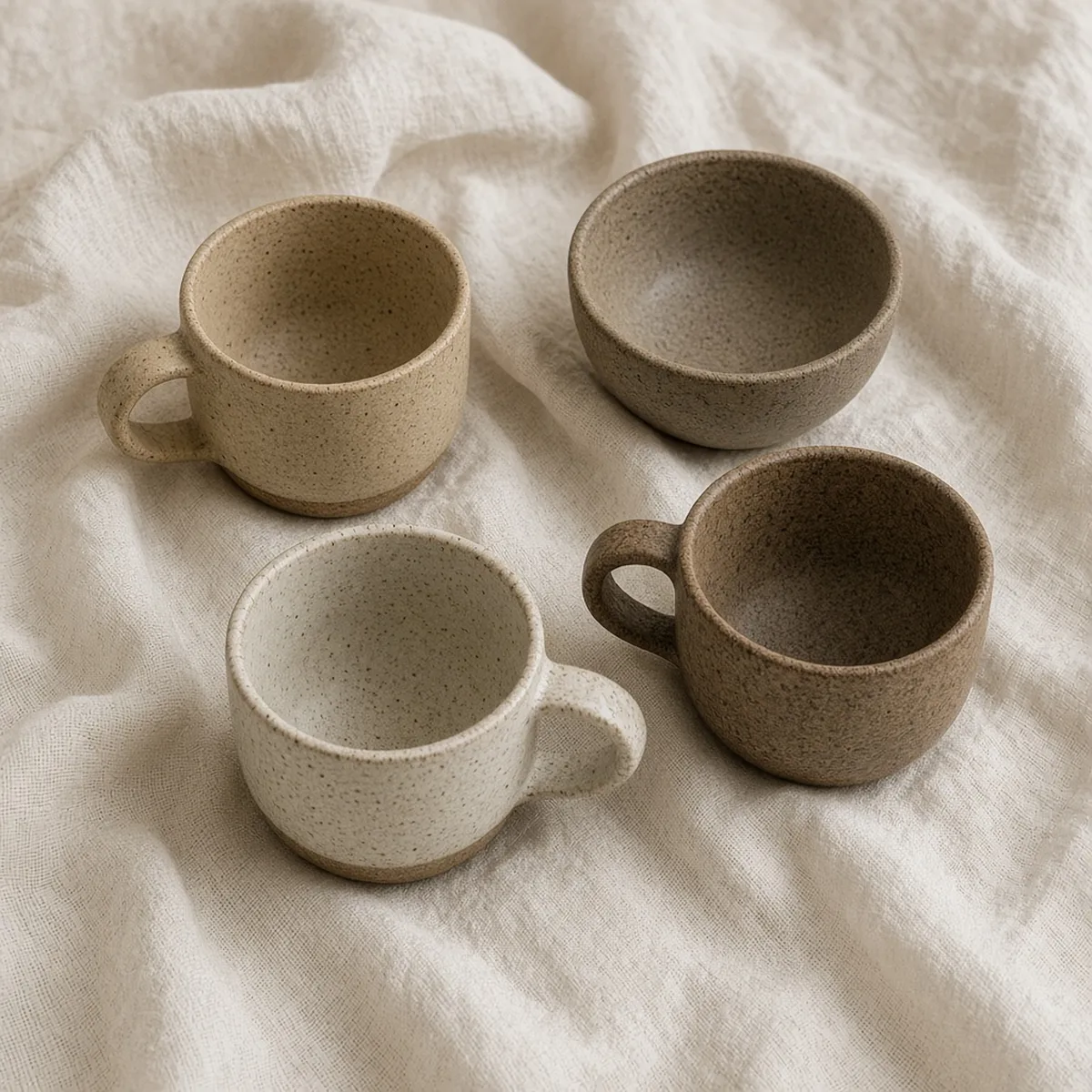
Add only when a missing shape appears weekly. Matching sets are optional; tonal harmony (cream, sand, soft grey) usually photographs and lives better than strict matching.
Are matte glazes harder to keep clean?
Often yes. Matte and dry glazes can hold tea stains and oil marks more visibly than a smooth satin glaze. That is not a reason to avoid them—many people prefer the quieter look—but it means a soft sponge and occasional baking-soda paste. Avoid abrasive powders on decorative rims.
Can I move ceramics from fridge to oven?
Only when the maker explicitly rates the piece for that path. Thermal shock cracks even handsome stoneware. Warm pieces gradually: fridge to room temperature before a low oven, never flame under a cold casserole. When in doubt, use ceramics for serving and a metal pan for heating.
How should I store cups on open shelves?
Give each piece air. Nested towers of thin porcelain are where chips begin. If space is tight, stack with a soft cloth between plates and keep mugs in a single row. Open shelving near a stove collects grease—wipe monthly so glaze stays honest.
What should I look for when buying from a small studio?
Ask about food-safe glaze certification or testing, firing temperature, microwave guidance, and replacement policy for seconds. Hold the cup: rim thickness, balance, and handle clearance matter more than a perfect Instagram glaze pool. A good everyday piece disappears into the ritual—see also Quiet Linen Mornings for the table those ceramics sit on.